
How have Americans changed, ten years after 9/11? The subtle answer to the question appears in photographer Piero Ribelli’s new book. With 50 Main Street: The Face of America, Ribelli creates an instant classic, a collection of 50 portraits and 50 stories of 50 people in 50 towns in each one of the 50 states, all found at the same address: 50 Main Street. In telling the stories of people with something undeniably in common, the book inspires us to focus on the fundamental similarities we experience in our lives, rather than dwell on our differences. Ribelli flew 31,000 miles, drove another 16,000 miles, spent a few hours on trains and even enjoyed some ferryboat rides to reach all of his destinations. In a time when our society seems more divided than ever, whether it be by political party lines, religious beliefs, social issues or immigration policies, Ribelli chooses to focus on Americans with something in common—their address—to rediscover the people that embraced him when he first moved to the U.S. And that’s when we find out that, despite all the hardships that our nation has endured in the last ten years, Americans are still the same warm, intriguing and welcoming people he encountered twenty-five years ago. 50 Main Street is an honest observation of who we are as a people; a reminder of our roots, values and history, based on immigration, integration, opportunities and hard work. It shines a light on all that we share in the core aspects of our lives: a desire for freedom and social justice, dreams and aspirations, faith and a yearning for a better future. A non-judgmental, modern-day Alexis De Tocqueville and more positive than Sinclair Lewis, Ribelli takes us on an intimate journey across the country; he shares laughs, tears and even the occasional fried pie recipe.The book seamlessly takes us from state to state and introduces us to Main Street, from the twin firefighters in Pennsylvania to one-hundred year old Ralph, in Nebraska. Recent immigration is described in the stories of a Christian Iraqi girl in Michigan and a Puerto Rican pediatrician in Massachusetts. We share in the heartache of losing a child in the stories of people found in Colorado and Nevada. We realize the impact of war experiences in the stories from Arizona and the Dakotas. We meet a sixteenth-generation American descendent of the Brown family in Rhode Island and the Muslim version of Will Smith, Delaware. 50 Main Street is the quintessential Americana coffee table book; its message of unity and solidarity is timely, especially considering the recent ten-year anniversary of 9/11 and this year’s presidential elections. The patriotic subject matter will stimulate a discussion on tolerance, diversity and community, resulting in a more positive and respectful interaction with each other. About the Contributors At age 27, Piero Ribelli left Italy for the U.S., taught himself English, and started a new life as a professional photographer. His photographs have appeared in magazines around the world. He visited all 50 states by the age of 50 and became an American citizen while working on 50 Main Street. Douglas Brinkley is an American author, professor of history at Rice University and a fellow at the James Baker Institute for Public Policy. Brinkley is the history commentator for CBS News and a contributing editor to the magazine Vanity Fair. Mike Rowe is an American media personality best known as the host of the Discovery Channel series Dirty Jobs. He can also be heard as narrator on a variety of series and has appeared in recurring commercials for Ford Motor Company.
This book offers a unique look at a little-known aspect of immigrant culture in California and Nevada during the first half of the twentieth century. The years 1920 to 1950 represented the high point of the sheep industry in the western U.S. The mountain meadows of the Sierra Nevada were an important source of summer forage, and Basque sheepherders, many recently arrived from the Pyrenees, were primarily responsible for tending the flocks. The shepherd's life among the aspen groves was isolated and solitary, and it led many herders to utilize the trees as a means of self-expression. Using simple tools such as pocket knives or nails, the herders turned to the white bark of the aspens. On this living canvas, they etched a remarkable series of carvings, recording everything from their own names to observations of the natural world around them, memories of the Basque Country, and not surprisingly, erotic fantasies. Over time, the living and perishable nature of the medium subtly altered the sheepherder's work, and eventually doomed it. Most of the carvings are now lost. Jean and Phillip I. Earl have spent forty years locating, identifying, and preserving as many of the carved images as possible, eventually assembling a collection of over 130 wax-on-muslin rubbings made directly from those images. This book reproduces a selection of those images and includes text describing the sheepherder's world, the style and content of the carvings, and the Earls' efforts to preserve them. Accompanying the text is a companion translation in the Basque language by noted Basque scholar Joxe Mallea-Olaetxe.
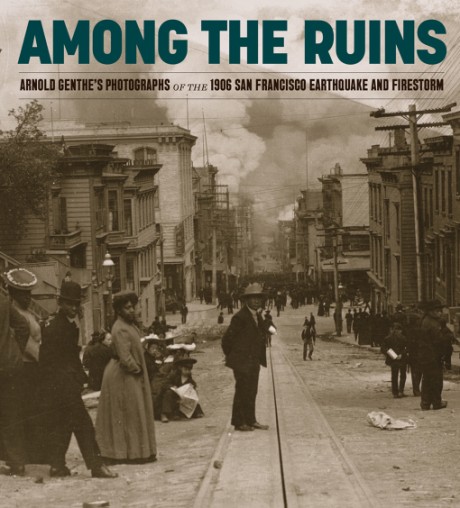
With beautiful laser scanner duotones and 365 previously unpublished photographs, this is a fascinating study of the "great quake" in San Francisco in 1906--and of the likelihood of a similar quake today.
Take one long-married and occasionally exasperated couple getting along in years, their well meaning daughter and precocious grandson, a clueless dog, an independent minded cat, plus assorted other quirky but endearing characters and you have the world of Pickles, Brian Crane's beloved comic strip that takes a wry but good-natured look at the foibles of family and friends. How Come I Get Blamed For the Things I Do? is the fifth collection featuring the domestic ups and downs of Earl and Opal Pickles, validating Peanuts creator Charles Schultz's prediction that "Pickles is going to be around for a long time." Pickles is a two-time nominee for the National Cartoonist Society's Best Comic Strip of the Year, winning the prestigious award in 2001. It consistently tops comic polls, and appears in almost 700 newspapers worldwide.
Imogen’s family didn’t have much, and life was hard atop the wild hill they call home. But when Imogen declared she wanted to be a photographer, her father built her her very own darkroom. Flash forward. Imogen is a photographer and a mother. She has her hands full! How does she do it all? She turns the garden into a wonderland for her three growing boys and a workshop for herself. While she works, her boys play, and Imogen photographs them. Click. Click. Click. Photographing her sons leads Imogen to focus on plants and flowers — most notably her signature magnolia blossoms—for which she will become best known. Here, then, is the story of Imogen Cunningham, one of the finest photographers of the 20th century and mother to three boys.
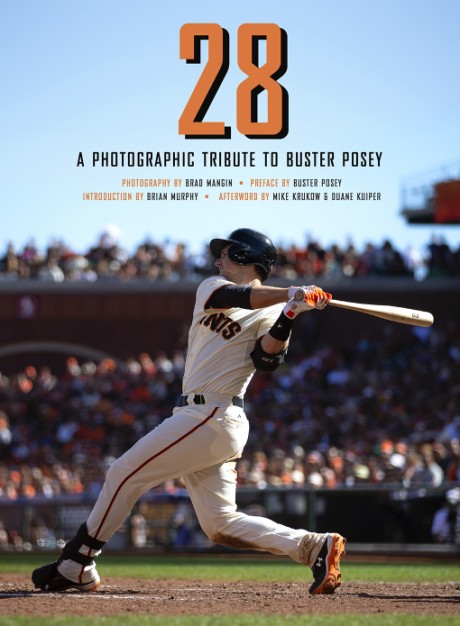
Brad Mangin, who has been photographing baseball for Sports Illustrated and Major League Baseball for over 20 years, has captured the 2012 MLB season from Spring Training beginning in February all the way through the World Series in October - all through the lens of Instagram on his iPhone. Instagram is a hugely popular app for iPhone and Android smart phones that recently sold to Facebook for one billion dollars. It has over 6.8 million followers, and all them have been alerted about what Brad is doing. Brad currently has 3,300 followers on Instagram, all tuning in to see Mangin's "Instant Baseball" photography as he sets out to revolutionize the world of sports photography. Whether it's Major League All Stars like Bryce Harper, Buster Posey, Jason Heyward, Joe Mauer, Josh Hamilton, Hanley Ramirez, and Tim Lincecum in the dugout, or the incredible scenery of baseball's finest ballparks like Yankee Stadium, Citi Field, and AT&T Park, or the art of baseball seen by many but recognized as photo-worthy by few like hot dogs on a grill, the freshly rubbed-in baseball, helmets in their cubbies, bullpen phones and baseball bats - Mangin utilizes the incredibly beloved yet accessible photo technology of Instagram to document all of these subjects in INSTANT BASEBALL. With an introduction by the popular ESPN reporter Pedro Gomez, INSTANT BASEBALL is destined to become a classic in the world of sports photography books and a perfect keepsake for every baseball fan.
Kiki loves Coco, her cloth doll. Coco loves Kiki, her girl. The two are never apart. It’s as if they were made for each other. Together they travel to Paris and delight in the city of lights. But then Coco is separated from Kiki. Will she ever see her girl again? This sweet story about a doll and her girl, inspired by the lovely photography of Stephanie Rausser and a real hand-made doll created by doll maker Jess Brown, will charm readers of all ages. Photographer Stephanie Rausser is an advertising and editorial photographer who loves photographing kids, especially her daughter Kiki. Stephanie sees the world for all its beauty and humor and loves making it a little more fun, pretty and inviting. Her 2008 trip to Paris with Kiki and Coco resulted in some of her favorite photos of all time. www.stephanierausser.com Jess Brown has always made dolls for her children, Stella and Tiger. Combining her love of antique textiles and the sensibilities of a comfort doll, she created a line of small rag dolls for her shop, Maude, in Petaluma, California. The dolls quickly won the hearts of adults and children alike and are now available in shops around the world. www.jessbrowndesign.com Nina Gruener has written two other children's books, Above San Francisco and Above New York. She lives in Petaluma, California, with her husband and two children.
With artful images rich in visual poetry, Light at the Edge brings the reader into the beautiful and ephemeral landscapes of Point Reyes, California. Located at the edge of the continent and sculpted by massive tectonic plates, this landscape is constantly changing. Pacific Ocean fog pours in and glows in dawn and at sunset. Waves crash against the shore and create stunning vistas defined in beautiful light. It is a place that stimulates all one’s senses, and each moment is a gift. Breaking new ground in landscape photography, the images throughout Light at the Edge have the power to convey the land’s beauty and the magic of experiencing it.
This book embodies one person’s life of creativity and the pursuit of a vision – in this case an architectural vision. Years of teaching have allowed the author to observe that we all have the power to be creative. He lays out the experiential process of being creative, from early influences, through the evolutionary development of ideas and forms and, finally, to the reality of multiple expressions. As he has stated in his lectures, the starting point of creativity is contained in the ancient meaning of two words: enthusiasm and genius. The word enthusiasm, from the classical Greeks, is derived from “en-theos” – bringing forth the God or spirit within. Originally the Latin word, genius (spirit), described a person who utilized his or her natural talents and abilities – a person thought to be in touch with his inner spirit. In both cases the ancients believed the ability to be creative was already inherent within each individual. The author envisions architecture as a restatement of nature – of the earth and the sky. The language of this architecture has a universal appeal originating from visual codes accumulated over eons of time in the human unconscious. It puts us back in touch with our primordial roots. This is an architecture of belonging – to the earth, to the place, to the human spirit.
This is the first book on the American sculptor and ceramist Mary Tuthill Lindheim (1912- 2004) who, with contemporaries Edith Heath, Peter Voulkos, Marguerite Wildenhain and others, awakened the art world and public to the exciting potential of clay as a fine art medium. A student of Alexander Archipenko, Isamu Noguchi, and José de Creeft, Lindheim entered ceramics in 1946 as a fully formed sculptor. A year into her new career, she was exhibiting with the best potters of her generation. A leader in three influential artists’ organizations–the Association of San Francisco Potters, San Francisco Women Artists, and Designer-Craftsmen of California—Lindheim worked to foster dialogue among museums, critics, and artists and to break down what she saw as artificial and destructive distinctions between "art" and "craft". During her most prolific period in ceramics, 1947-1969, she was featured prominently in national publications and exhibited in most of the important ceramics and studio craft shows of the period. Her work is in the collections of numerous museums, including Arizona State University Art Museum, the Bolinas Museum, Crocker Art Museum, Mills College Art Museum, Nora Eccles Harrison Museum of Art (Utah State University), and the Oakland Museum of California, among others. MARY TUTHILL LINDHEIM: ART AND INSPIRATION features a foreword by Julie Muñiz, curator of decorative arts at the Oakland Museum of California; a lead essay by West Coast critic and sculptor Maria Porges; an essay on Lindheim’s role in Bay Area ceramics by editor and art writer Abby Wasserman; and an essay by Wasserman and filmmaker Aram Fischer, Lindheim’s grand-nephew, on Lindheim’s social and political activism. It also contains a detailed illustrated chronology, a bibliography, short bios of Lindheim’s teachers and contemporaries, an index, and passages of Lindheim’s own writing, documenting her personal and professional history and imparting the flavor of a fascinating and beautiful woman who lived by her own rules.
Oyster Culture looks at the rich intersection between oyster farming and culinary culture in this unique habitat in Northern California, which has remained relatively pristine due to conservation measures and agricultural land trusts. In this foggy landscape, farmers must navigate the sometimes tenuous relationships between their industry and the interests of the public, federally protected lands that surround many oyster farming sites. Despite these challenges, oyster farming in West Marin has thrived as a sustainable industry, providing an important food source to both local and distant markets. Oyster Culture includes local history, stories and anecdotes from the people who work the watery terroir, and distinct recipes from the region’s chefs. Seventy-four black-and-white and color photographs enrich the story This product is available for advanced purchase. Coming in June!
With anticipated excitement, Sondra Bernstein's second book Plats du Jour; the girl & the fig's Journey Through the Seasons in Wine Country really takes you on a Sonoma journey. The book features over 125 full color photographs and over 100 wine country recipes. These are recipes from the beloved wine Country Destination restaurant in Sonoma that have been tailored for the home cook with easy ingredient substitutions, wine pairings and cheese platter suggestions and more. Since the publication of the first book in 2004, different aspects in the girl & the fig world have evolved. One of the changes that has been introduced is a wine country take on the concept of Plats du Jour, a set weekly menu that includes a starter, main course, and dessert or cheese course. The Plats du Jour concept began as an innovative way to offer our guests a great value utilizing the very best of the season. Plats du jour is a very traditional concept in France dating back to the 1800 s when restaurants served only one meal each day. (It literally means plate of the day. ) Each year the restaurant creates 52 new, three-course seasonal menus to show off the best of what s available in Sonoma County at that time. In the book, Plats du Jour, the menus are distilled down into a more manageable 28 menus for the home cook. The Plats du Jour menus are an ingredient tour through the year. The 28 three-course menus are arranged by season, and include a cheese pairing for each menu. While set menus are introduced, there is plenty of opportunity for creativity. You can mix and match the recipes from various menus according to your taste. The menus simply give you a chance to plan ahead for a dinner party or family gathering. All of the recipes serve six people, allowing for a weekend dinner party or a weekday dinner with a day or two of delicious leftovers. This stays true to Sondra's philosophy that friends and family should gather over a great meal! Aside from the wide range of recipes, Sondra fills the book with stories about some of the restaurant's cherished producers and interesting tidbits about ingredients and life in Sonoma. As one might expect from a book originating from Sonoma, there is wonderful information about the unique Rhone grape varietals that are featured at the girl & the fig. Each recipe offers wine suggestions that will entice any palate. The book is generous with resources, contact information and especially gorgeous photographs that show off Sonoma Wine Country in such a way, that you may find yourself visiting before you realize. About the Author One sure thing that can be said about Sondra Bernstein is that she has no idea how to relax. Her passion for the hospitality business is her driving force and continues to inspire her to create and recreate. She opened her first restaurant in 1997 after four years at Viansa Winery and many successful years in restaurant management in both Los Angeles & Philadelphia. Currently, Sondra is the Proprietor/CEO of the girl & the fig and ESTATE restaurants in Sonoma & the fig café & winebar in Glen Ellen. She is the author of the "the girl & the fig Cookbook" published by Simon & Schuster in April 2004. Her gourmet FIGfood product line is available nationwide under the girl & the fig label. With a passion for food and wine, the trip from Philadelphia to Sonoma County was inevitable. Having restaurants in Sonoma County is a tribute to the efforts of the farmers, ranchers, cheese makers and, of course, grape growers & vintners in this bountiful landscape. When she is not busy working on her restaurants menus, accounting or marketing, she can be found playing in one of her many projects including; the Très Bonnes Années label wine, The Farm Project, her second cookbook, development of the girl & the fig iphone application and the company's new website to name a few.
There are a number of historical books about Haight-Ashbury but nothing that portrayed the modern Haight-with its rich mix of 1960's tie dyes, 1980's Deadheads and 2000's murals recalling the past. This was the germ of the idea to create a book of images that reflects the Haight of today. But the Haight-Ashbury neighborhood does not exist in isolation. Its history and culture are intertwined with the City of San Francisco and the Greater Bay Area that surround it hence the structure and title of the book. For the production of this book Dick worked closely with his long time photo-editor, Yasemin Kant. Ben Fong-Torres, noted Bay Area writer and former founding editor of Rolling Stone magazine, wrote the Foreword and section introductions. The background research was provided by local guide and historian Stannous Flouride. About the Contributors Born and raised on a cattle ranch in Oregon (U.S.), Dick Evans could easily have stayed homeand become a cowboy. Instead, he studied engineering and evolved into a globe-trotting CEOwith more than 75,000 employees worldwide. Along the way, Dick lived in North America, Africa, and Europe. He also traveled extensively to countries like China, Japan, Brazil, Australia, Iceland, and India among others. And while fly-fishing on a stream in northern Quebec (Canada), he rediscovered his passion for photography. Ben Fong-Torres is an American rock journalist, author, and broadcaster best known for his association with Rolling Stone magazine (through 1981) and the San Francisco Chronicle (from around 1982).
Stay Up! Los Angeles Street Art is an investigation of the global phenomenon of street art. Told from the perspective of artists working in Los Angeles, it offers a new vantage point for understanding an art form that is widely popular yet has been the subject of speculation and much uncertainty. Questions whether street art is the next major art movement or if it a simply a trend and the differences between graffiti and street art are explored. A number of counterintuitive themes plague street art but that does not stop the excitement and enthusiasm surrounding this engaging and exciting art form. Street art has exploded as a creative outlet and progressed from a counter culture movement based in graffiti in previous decades to a legitimate business platform in design, fashion, film, publishing, and art. The author explores the uniqueness of L.A. along with some of the successes and pitfalls these creative artists encounter. The major themes presented will familiarize the reader with the street art scene in L.A. and add new meaning to this creative capital.
Hardcover, Foil-stamped case, Limited Edition I have no doubts that this collection of Quinn’s paintings will permanently place him in that pantheon of brave and talented painters who have distilled a distinct and compelling aesthetic message from nature. Without propagandizing, but armed with the intent to seek truth, the artist is a messenger as he expands and clarifies our understanding of the world. Among the best, Thomas Quinn has produced a body of magnificent paintings that, along with bringing us singular pleasure in their beauty, also testify to what is at stake if nature and we are to endure. — From the foreword by Tony Angell, Artist / Naturalist
The granddaddy and originator of all low-carb diets. This classic was first published in 1964 and sold 2,400,000 copies in 13 languages.
The one and only original, newly updated with wine recommendations for each dish. More than 200 recipes in a health-conscious guide to good dining with an emphasis on fresh, natural ingredients and simplicity of preparation. Robert W. Cameron, in cooperation with a panel of doctors, nutritionists and home economists, have devised a fantastic resource. It counts carbs for you- by the recipe and by the day.
Over the past thirty-plus years, the beer industry in the United States has transformed itself from being the butt of international jokes (thanks to Prohibition and the subsequent dominance of mass-produced, insipid lagers in this country) to being the most innovative and delicious craft beer culture on the planet. From the beginning, no region of the country has been more influential in helping shape and inspire the craft beer movement than Northern California. Following Fritz Maytag’s revitalization of San Francisco’s Anchor Brewing in the mid-1960s and the establishment of New Albion Brewing Company in Sonoma in the decade afterwards, current brewing innovators such as Sierra Nevada Brewing Company and Russian River Brewing continue to ensure that there’s never been a better time or place to seek out great beer. The Northern California Craft Beer Guide is the definitive handbook to the artistry, people, and history of the region’s craft beer scene. While many guidebooks rely on second-hand accounts or (worse?) provide coverage that fails to do the footwork of discerning the insipid from the delicious, this isn’t one of those books. Beer writer Ken Weaver and photographer Anneliese Schmidt have invested months of precious drinking time into visiting the furthest corners of Northern California: from the latest Belgian-style beers coming out of Arcata, to the newest beer-centric burger joint in Santa Cruz, to the phenomenal brews of Central Valley nobody’s ever heard of. Their goal was to create a guide that does this beer scene justice. “Intrepid”? That’s a good word. “Funny”? Hopefully sometimes. “Useful”? Dear god, it had better be. Encompassing breweries, beer bars, restaurants, bottle shops, and homebrew shops (as well as plenty of other people and places that were just too cool to leave out), The Northern California Craft Beer Guide is a collection of over three hundred entries and topics highlighting the very best the region has to offer. About the Contributors Ken Weaver is a beer writer, fiction writer, and technical editor based in Northern California. Ken received his MFA in creative writing from the University of Maryland, and his M.S. in physics from Cornell. He’s a Certified BJCP beer judge and a frequent contributor to All About Beer. Anneliese Schmidt (Ali) was born and raised in Marin County, CA. She has an M.S. in physics from Cornell University. Ali is a freelance photographer and is currently a student at the New York Institute of Photography. Her beer-centric photographs have most recently been featured in All About Beer. Ken Grossman is the founder and Owner of Sierra Nevada Brewing Co. in Chico, CA. Also author of the upcoming book Beyond the Pale: The Story of Sierra Nevada Brewing Co. (Wiley 2012).
From grape to glass, Joe Mesics invites us to join him on a wine road less traveled—the one that the furrowed-brow grape grower takes everyday. VIT LIT is a whimsical compilation of stories, ruminations, and reflections that take an unscholarly look at the grape grower and his world. As the wine industry has expanded, so has the interest in grape growing and winemaking. What has waned in the wine landscape is the presence of the old-timer grape grower cultivating nature. In response to the evolution of the industry, the new grape grower lives and works the land in different ways. VIT LIT is a longtime grower’s story, full of radiant sunrises as well as dark rainy days, and the inside story of character development in the vineyard. This product is available for advanced purchase. Coming in June!
West Marin Review is a literary and art journal inspired by the extraordinary landscape of western Marin County in Northern California. Framed by the Point Reyes National Seashore and rolling pastureland, this area has long attracted artists and writers, many of whom are featured within the Review alongside others whose work appears here for the first time in print.
Wine’s Hidden Beauty reveals an exciting new perspective on wine that combines art, science, and spirit just like winemaking. Scientist-photographer Sondra Barrett's revolutionary images will help you enjoy wine while exploring its mysteries. With the microscope as a starting point, the author presents a delectable discovery of wine’s secrets - from stories of great winemakers, tasting tips, sustainability, and why the grape, to the potential of mysterious patterns within wine. Wine’s Hidden Beauty is an unabashed feast for the senses, a glorious celebration of the magic and fun of wine.